

It’s been a hectic start to the academic year, and we know many of you have been stretched thin with teaching, new systems, and continuing uncertainty around workloads and structures. Here’s a brief update on where things stand locally and nationally.
1. Workload Planning – the “everything’s fine” narrative
The University continues to assure us that workload planning is progressing smoothly. Member feedback tells a very different story.
We are expecting a report from the University by the end of this week on the status of workload allocations. In the meantime, a few key reminders:
- If you have a research buyout, the University has confirmed that it applies only to teaching hours — it does not come off the 400 hours allocated for research. If your workload shows otherwise, or if this interpretation causes issues in your department, please let us know immediately.
- If your workload is unreasonable, inaccurate, or was not negotiated with you, do not agree to it in the system.
- Decline it if you don’t agree. The University is treating undeclined workloads as “agreed,” which distorts the data. Declining your workload is the clearest way to register disagreement and support our case for reform.
- If things have been added without consultation, or if your workload doesn’t reflect what you actually do, please decline your workload in WAMS.
Your feedback directly strengthens our position in the ongoing discussions about the Workload Planning Model.
2. National Ballot – Vote YES for Pay and Conditions
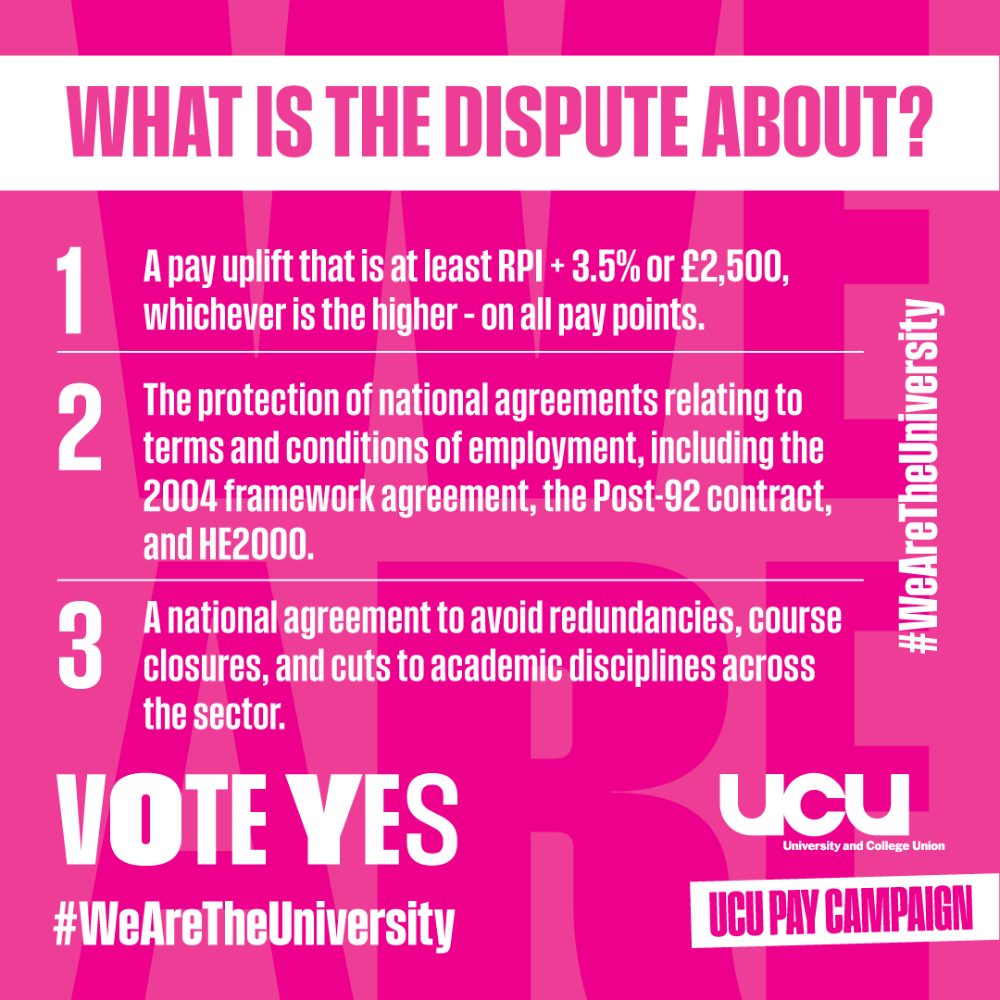
On the national front, please make sure you’ve returned your ballot in the ongoing UCU pay and conditions campaign #WeAreTheUniversity.
At Bournemouth, the Vice-Chancellor has been explicit: there will be no promotions or pay progressions (beyond legal increments) until the University is “in the black” — which by her own account won’t be until 2028. That means many staff are effectively frozen for the next three years.
Voting YES in this national ballot is our only meaningful route to any pay improvement in the short term. It also sends a message that staff are no longer willing to absorb endless real-terms cuts while the University runs on goodwill alone.
Remember this is a national campaign across multiple unions: this is our chance to not only put pressure on universities, but on the government. A government that could easily resolve the situtation in UK HE putting our jobs at risk. Vote early, vote yes!
Please:
- Post your ballot as soon as possible. If you have not received a ballot, you can request a replacement here until 23 Nov.
- Tell us you’ve voted – email Patrick Neveling (Campaigns Coordinator) and use the national “I’ve Voted” link. Ballot is open until 28 Nov 1700, but better to vote early!
- Post a photo of your ballot envelope on social media and tag @BournemouthUCU (Bluesky, Instagram, TikTok, even Twitter/X if you’re morally grey). It makes a huge difference to visibility and solidarity when members show up publicly.
3. Joint Negotiations – the appearance of progress
We met with the University in JCNC on 22 October. The tone of this meeting was noticeably more constructive than earlier in the year: both Peter Mitchell (Chief People Officer) and Niamh Downing (Interim PVC Education) appeared open and engaged.
However, while the tone has improved, the pattern remains familiar: assurances are made, but action does not follow. Key items from the last JIG and JCNC remain unresolved. We were due to revisit certain points at the joint UCU–Unison JCNC this week (29 Oct), but that meeting was cancelled at the last minute despite the University knowing in advance that Unison could not attend. We are disappointed in the lack of respect these actions (or lack thereof) demonstrate for union members and representatives.
These cancellations also mean that we have little progress on our Trade Dispute, which remains ongoing as we await meaningful university action to resolve it.
We have now written formally to the University making clear that:
- UCU did not agree to a reduced JCNC schedule;
- We expect meetings to be held as previously agreed until the new system proves it can actually function;
- We remain in a Trade Dispute until meaningful action is agreed.
The short version: there’s been plenty of “we’ll get to that soon,” but little evidence of it actually happening. We’re holding the line.
3. Communication (or the lack thereof)
The University continues to struggle with consistent internal communication. Different information is coming from deans, HR, and line managers, creating confusion and unnecessary stress. This is not an individual failing — it’s structural. We are continuing to press for better training, clearer lines of responsibility, and accountability for those decisions that keep bouncing between departments.
If you’re running into contradictory instructions or being asked to do things that clash with policy or practice, please tell us via the General Reporting Form. It helps us map patterns and act collectively. If you have a specific case that needs resolution, please submit a Casework Proforma.
5. In summary
Teaching and research at BU are continuing largely thanks to the goodwill, professionalism, and exhaustion of our members. The systems designed to support that work — workload allocation, communications, and governance — remain dysfunctional.
We are holding the University to account, and we need your continued engagement to do it effectively. If something’s wrong in your workload, department, or communications from management: tell us. It all matters.
In solidarity,
BU UCU Executive Committee
Discover more from Bournemouth University University and College Union (BU UCU)
Subscribe to get the latest posts sent to your email.
